

Instructional strategies can be categorized as direct, indirect, interactive, experiential, or independent. The direct instruction strategy is highly teacher-directed and is among the most commonly used. This strategy includes methods such as lecture, didactic questioning, explicit teaching, practice and drill, and demonstrations. In today’s classroom discussions, we worked on the Frayer Model (shown below) where we had to define the word “mindset”, what it means to us, its characteristics, examples and non-examples. At first it was tough to think about, as the word “mindset” is something we have but we don’t normally talk about, or define. So, I understood where Susan was going with this lesson. This gave us the opportunity to think outside the box, collaborate our ideas together, which initiated a discussion from two different views.
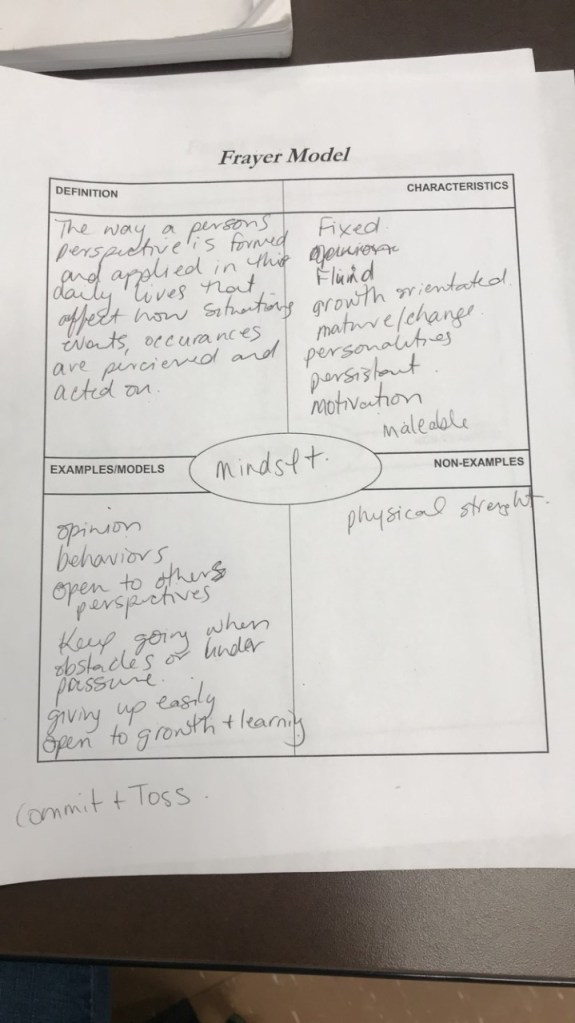
There are several reasons why teachers initiate instructional strategies. For instance, it allows students to get out of their seats and move around the room to discuss what others have written down. As discussed in class, using a variety of strategies encourages our students to be adaptive to other opinions and to collaborate among their peers. Some of us did not realize that although we may feel stuck while thinking of strategies we can use, Susan introduced us to the Ed Online SK Curriculum website, where these strategies can accommodate whichever subject we will be unpacking.
Although this was tough to learn about and practice using, I will consider using this when it comes to uncovering new information in the classroom. During my pre-internship teaching days, I was given the opportunity to watch my co-op teacher use the Frayer Model with our ENG B30 class. We unpacked themes of the novel as reference for our students to use for their final assessment (essay).

